
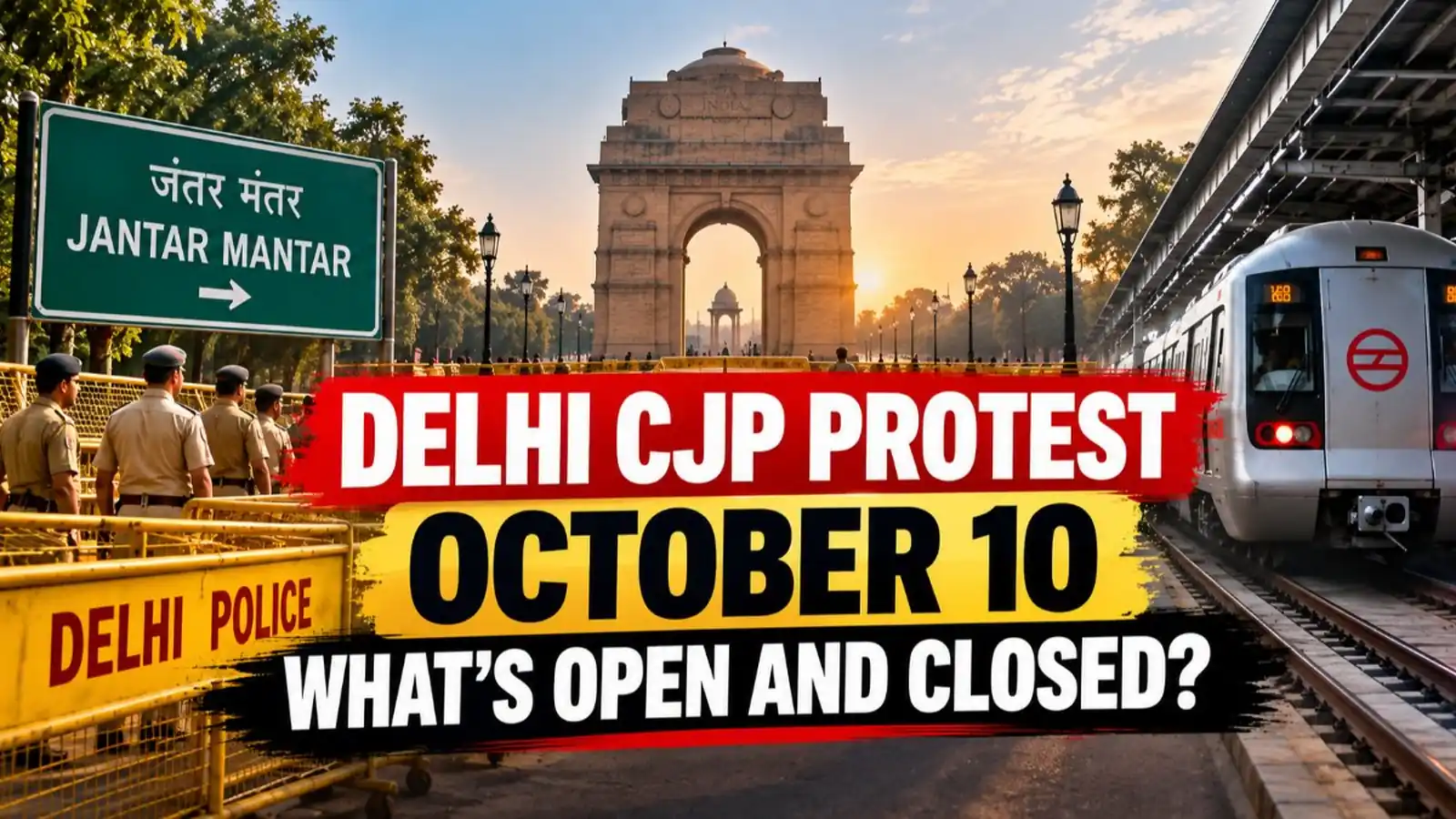
India's electoral administration faces intense national scrutiny as civil society organizations and political parties mount sustained demonstrations against the Election Commission of India's Special Intensive Revision (SIR) process. The dispute has reached the Supreme Court, where petitions seek reconsideration of prior judicial clearances.
Key Takeaways
- Official Status: The Delhi Police and railway authorities confirmed preventive transit restrictions, Section 144 enforcement, and multi-layer perimeter cordons across key border entry points. Telecommunications administrators issued localized mobile internet suspension orders across designated sensitive police jurisdictions.
- Agency Reporting: Wire services confirm over two dozen regional train services bound for the National Capital Region were diverted or short-terminated, alongside significant paramilitary deployments across Central Delhi. Protesting coalitions organized under civil society banners announced coordinated marches demanding labor protections, agricultural support, and electoral transparency.
- Direct Impact: The swift pre-emptive shutdown paralyzes inter-state logistics corridors and daily commercial commutes, imposing severe operational costs on freight and gig-economy workforces. The state apparatus demonstrates an entrenched playbook of using communication blackouts and transit choke points to neutralize urban assembly.
- Debunked Claims: Social media claims alleging a complete indefinite shutdown of the Delhi Metro network and citywide commercial curfews are false; transit authorities confirmed standard metro operations with regulated access only at select border and central stations.
The Core Dispute: Why Protests Are Growing
At the heart of the nationwide protests is the Special Intensive Revision (SIR), a comprehensive door-to-door verification exercise undertaken by the Election Commission of India under Section 21(3) of the Representation of the People Act, 1950. Opposition groups and civil liberties activists allege that the accelerated revision mechanism has facilitated irregular voter deletions without adequate individual notice, raising concerns over disenfranchisement.
Protesters in Delhi, Mumbai, and Bengaluru have organized public rallies demanding increased transparency, an immediate stay on automated deletions, and mandatory physical receipts for voter status verification. Demonstrators argue that urban migrants and economically vulnerable communities bear the brunt of unannounced roll purges.
Supreme Court Scrutiny & Legal Precedents
The controversy follows the Supreme Court's May 2026 judgment in Association for Democratic Reforms & Ors. v. Election Commission of India, which upheld the constitutional validity of the revision process under Article 324. However, fresh applications by civil society petitioners, supported by public interventions from former judicial figures, argue that administrative changes made to voter registration Form 6 were implemented without full institutional concurrence.
The apex court has issued notices seeking clarification from the Election Commission and Union Law Ministry on procedural safeguards. Legal scholars emphasize that while electoral roll purification is essential to prevent duplicate entries, democratic credibility demands robust appellate mechanisms before any citizen is struck from the rolls.
Frequently Asked Questions
What are the verified facts of this development?
The Delhi Police and railway authorities confirmed preventive transit restrictions, Section 144 enforcement, and multi-layer perimeter cordons across key border entry points. Telecommunications administrators issued localized mobile internet suspension orders across designated sensitive police jurisdictions.
What is the practical impact on everyday citizens and readers?
The swift pre-emptive shutdown paralyzes inter-state logistics corridors and daily commercial commutes, imposing severe operational costs on freight and gig-economy workforces. The state apparatus demonstrates an entrenched playbook of using communication blackouts and transit choke points to neutralize urban assembly.
Are viral online claims or rumors substantiated?
Social media claims alleging a complete indefinite shutdown of the Delhi Metro network and citywide commercial curfews are false; transit authorities confirmed standard metro operations with regulated access only at select border and central stations.



Reader Discussion