


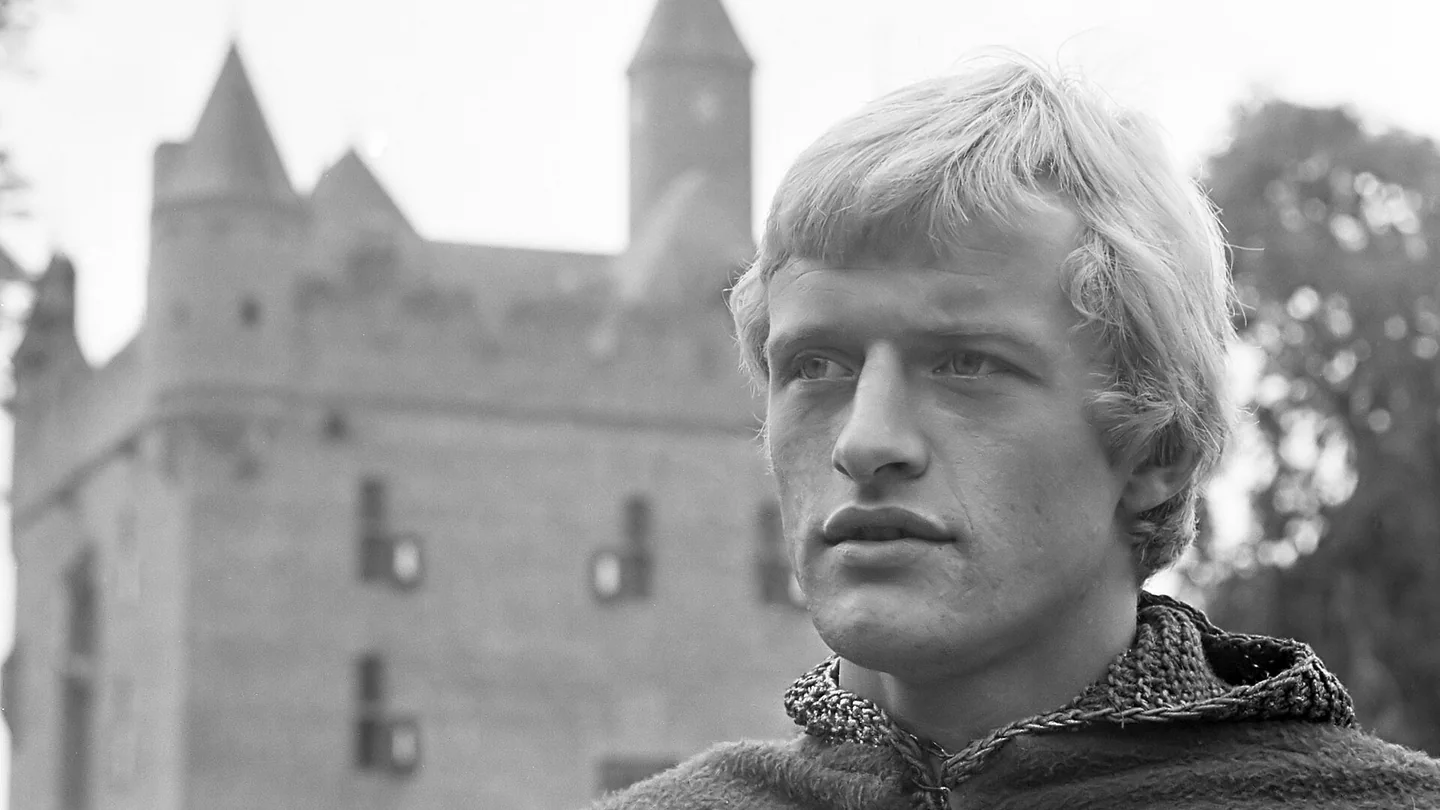
Rutger Hauer photographed in 1968, before his role as Roy Batty in Blade Runner. Archive photograph, not a Blade Runner still. Eric Koch for Anefo. CC0. Cropped/resized and converted to WebP.
The unsettling thing about a replicant is how little the word tells you about the person standing in front of you.
In Blade Runner, replicants are artificially created, biologically engineered beings who look human. The BFI’s description of the original film identifies them as beings made to serve human masters. They are not simply ordinary people carrying a few mechanical upgrades.
That answers the science-fiction label. The harder question is why knowing their origin should give anyone permission to own them.
This guide discusses broad premises and character details from the films, while leaving major endings aside.
Think beyond the robot with a metal skeleton
A familiar screen robot makes its machinery visible. You can point to the casing or the joints and understand why characters classify it as a machine. Blade Runner removes that comfortable distance.
The replicants have faces you can read. Their fear and desire invite the same attention you give other characters. The story then introduces a category that tells society to treat those lives differently.
That is the tension to carry into the film. The category is supposed to make the distinction easy. Watching the people placed inside it makes the distinction harder.
“Retirement” is a word worth hearing carefully
Deckard’s job is to track down escaped replicants. In the film’s vocabulary, killing one can be described as retiring it. The softer word makes a violent action sound like routine administration.
Our interpretation is that this language does moral work for the people using it. It encourages them to describe a life as a product being removed from service.
Listen for that distance between an official description and a character’s experience. You do not need a chart of every replicant model to notice it.
Why do memories matter so much?
The BFI’s account discusses Rachael and artificially implanted memories, alongside the film’s long-running uncertainty about Deckard. The details complicate a simple rule that a remembered childhood must settle someone’s identity.
But a memory question is also an emotional question. If an experience feels personal to someone, learning that it was supplied by another person does not make their distress disappear.
Ask what the memory allows someone to believe, what happens when that belief is challenged and who benefits from controlling the answer.
Do we have to settle Deckard’s identity?
The question of whether Deckard is a replicant has a long history of disagreement. It is not useful to present one interpretation as an uncontested answer and spoil a newcomer’s experience in the process.
You can keep the question open and still understand the larger conflict. A story about how people behave towards beings they can control does not lose its force because one identity remains disputed.
On a first viewing, spend less time hunting for a definitive label and more time noticing the choices people make once they think a label gives them authority.
Where does 2099 fit?
Amazon currently announces November 25, 2026 for Blade Runner 2099 and identifies Michelle Yeoh’s Olwen as a replicant. That is an upcoming story, not one we have reviewed.
The original films already give a useful starting point: being created does not, by itself, answer whether someone deserves care. The discomfort comes when a society acts as though it does.




Reader Discussion