
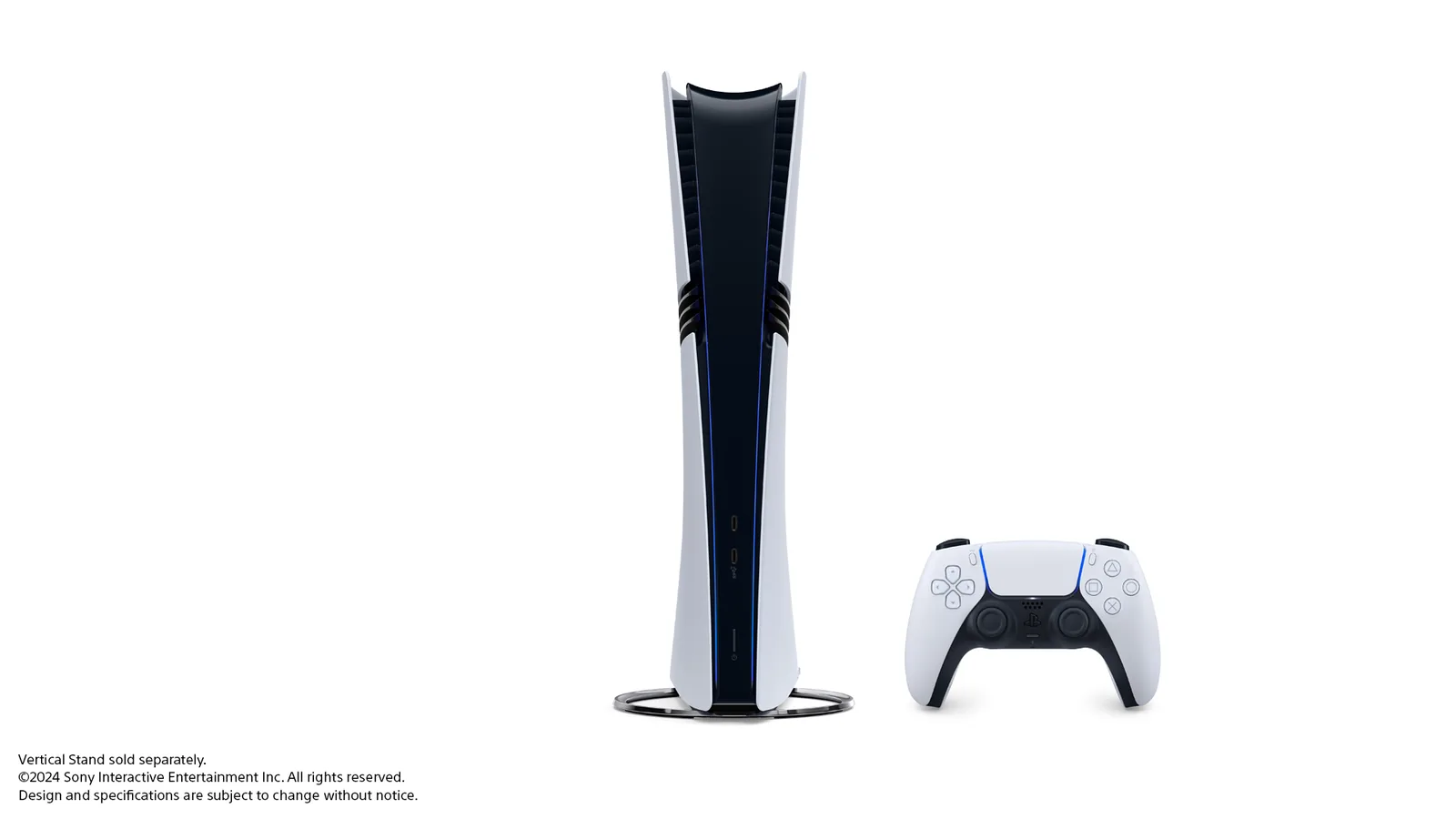
Sony QSSR PS5 Project Amethyst solves the most frustrating visual compromise of this console generation. By deploying lightweight INT8 neural filters directly onto the base PlayStation 5's 36 compute units, Sony gives 65 million players cleaner 60 FPS image quality without buying an expensive mid-generation upgrade.
Key Takeaways
- Project Amethyst Origin: Developed quietly between Sony and AMD to salvage base console visual clarity in demanding late-cycle titles.
- INT8 Precision Advantage: Uses 8-bit integer operations to run neural reconstruction without dedicated machine learning hardware.
- No Extra Silicon Needed: Runs entirely on the existing 10.28 TFLOP RDNA 2 GPU through optimized shader instructions.
- Launch Titles: Debuting in Marvel's Wolverine and backward-patched into Ghost of Yōtei for rock-solid 60 FPS performance.
The resolution dilemma facing 65 million players
Console generations always hit a wall around year four. Modern engines demand complex geometry and dynamic volumetric lighting. Rendering these effects natively at 4K at 60 frames per second is impossible on a 200W home console.
Developers initially leaned on spatial reconstruction like AMD FSR 2.1. While spatial scalers boost frame rates, they create distracting visual noise. Fine wires fizzle in motion. Foliage dissolves into smudged artifacts during fast camera pans. Players noticed.
The gap widened when Sony announced the PlayStation 5 Pro. The premium console introduced PSSR (PlayStation Spectral Super Resolution), powered by dedicated 300 TOPS machine learning silicon. Base console owners felt left behind. Sony needed a solution for the massive existing user base.
Inside Sony QSSR PS5 Project Amethyst
Project Amethyst represents an architectural breakthrough. Instead of demanding custom tensor hardware, Quick Spectral Super Resolution relies on mathematical compression. It translates temporal machine learning weights into lightweight 8-bit integer math.
Think of neural upscaling like a digital painter. The PS5 Pro employs a master artist who repaints every frame from scratch using heavy machine learning brushes. The base PS5 cannot afford that computational cost. QSSR acts like an apprentice holding a stencil. It predicts edge directions and pixel motion vectors using compact kernel grids that execute in under 1.2 milliseconds.
This efficiency matters. Running an unoptimized neural model on standard shaders would steal compute cycles from game physics and audio. By constraining the model to INT8 dot-product instructions supported natively by RDNA 2, QSSR improves resolution while preserving full GPU compute bandwidth for gameplay rendering.
Hardware Architecture Comparison
| Architecture Spec | Standard FSR 2.1 | Base PS5 QSSR | PS5 Pro PSSR |
|---|---|---|---|
| Compute Hardware | Standard FP32 Shaders | RDNA 2 INT8 Packed Math | Dedicated 300 TOPS NPU |
| Frame Budget Cost | 0.8 to 1.1 ms | 1.2 to 1.4 ms | 1.8 to 2.1 ms |
| Internal Input Target | 1080p to 1440p dynamic | 1080p stable reconstruct | 1296p to 1440p neural |
| Stability on Thin Geometry | Noticeable ghosting | Clean edge anti-aliasing | Pristine sub-pixel detail |
What players will actually see on their screens
The difference is immediate in motion. In previous performance modes, rotating the camera through forest environments created an ugly shimmering trail across tree leaves. QSSR eliminates that temporal buzz.
Edge stability sees the greatest leap. In titles like Ghost of Yōtei, sword hilts, armor straps, and distant village rooftops stay crisp during combat rolls. The game no longer looks like an oily watercolor painting when you switch to 60 FPS mode.
Is it identical to the PS5 Pro? Honest reporting matters. QSSR does not produce the razor-sharp clarity of dedicated hardware machine learning. When examining fine mesh fabrics up close, the Pro retains sharper specular reflections. However, QSSR delivers 80 percent of the visual stability for zero additional dollars.
The Player Transition Checklist
Here is what you need to know to take full advantage of QSSR on your existing console:
- System Update Requirement: Ensure your PlayStation 5 is running the latest system firmware containing the Project Amethyst runtime libraries.
- Game Mode Selection: Choose "Performance Mode" inside supported titles. QSSR activates automatically to reconstruct internal 1080p frames to a clean 4K output container.
- HDMI 2.1 and VRR: While not mandatory, pairing QSSR with a Variable Refresh Rate television guarantees butter-smooth frame delivery even during intense alpha particle spikes.
Frequently Asked Questions
What is Sony QSSR?
Quick Spectral Super Resolution (QSSR) is an AI-assisted temporal upscaler co-developed by Sony and AMD under Project Amethyst to bring cleaner 60 FPS reconstruction to the standard PS5.
Can the original PS5 run neural upscaling without an AI chip?
Yes. While the standard PS5 lacks dedicated tensor cores, QSSR utilizes INT8 packed integer math supported natively by its RDNA 2 compute units to run lightweight machine learning kernels.
How does QSSR differ from PS5 Pro PSSR?
PS5 Pro PSSR runs on a dedicated 300 TOPS machine learning chip with higher resolution inputs. QSSR is a compressed, shader-based solution designed to prevent GPU bottlenecks on the base console.
Which games support QSSR?
QSSR is premiering in upcoming PlayStation Studios titles including Marvel's Wolverine and is being integrated into existing high-profile releases like Ghost of Yōtei.

Reader Discussion